Everyone has a favourite Hokkien mee shop, and the debate over who serves the best Hokkien mee can get surprisingly loud. Guess that’s fair when even the uncle at your local hawker stall has his own idea of a good plate.
If seafood is what keeps you coming back, we’ve also rounded up some fish soup favourites across Singapore for your next food outing.
The Many Ways Singapore Hokkien Mee Stalls Never Misses
From smoky charcoal-fried noodles to rich prawn stock, these six stalls show how one dish can take on different flavours. Sometimes, an amazing Hokkien mee comes down to the little things, whether it’s the wok hei, noodle texture or a good spoonful of sambal.
Nam Sing Hokkien Fried Mee – 51 Old Airport Road, #01-32, Old Airport Road Food Centre, Singapore 390051
Hong Heng Fried Sotong Prawn Mee – 30 Seng Poh Road, #02-01, Tiong Bahru Market, Singapore 168898
Swee Guan Hokkien Mee – 5 Lorong 29 Geylang, Singapore 388060
Geylang Lor Charcoal Fried Hokkien Mee – 936 East Coast Road, 936 Food Village, Singapore 459129
Ah Hock Fried Hokkien Noodles – 20 Kensington Park Road, #01-27, Chomp Chomp Food Centre, Singapore 557269
Come Daily Fried Hokkien Prawn Mee (Tian Tian Lai) – 127 Lorong 1 Toa Payoh, #02-27, Toa Payoh West Market & Food Centre, Singapore 310127
1. Nam Sing Hokkien Fried Mee (Old Airport Road)
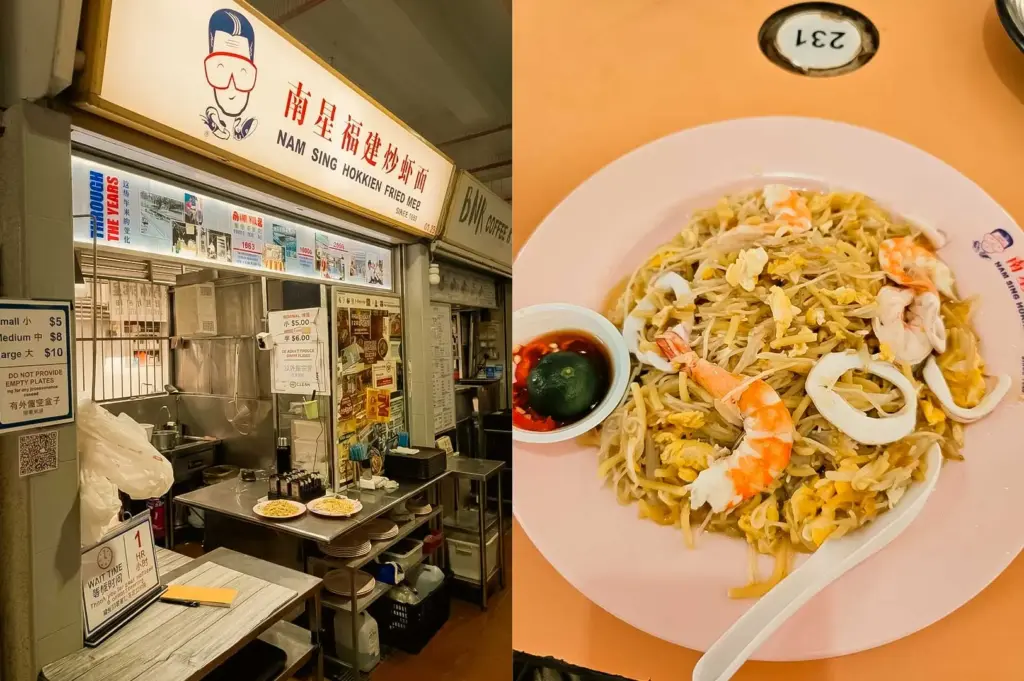
Some plates of Hokkien mee come swimming in gravy, but Nam Sing Hokkien Fried Mee takes a different approach. Around since 1960, this Old Airport Road favourite keeps things simple with yellow egg noodles, rice vermicelli and prawns.
What catches our attention is the drier style. The broth, made from prawn shells and tomalley, gets absorbed into the noodles rather than pooling around the plate. There’s something appealing about letting the prawn flavour come through without relying on a generous amount of gravy.
The City Scoop
The Standout Factor: Those who prefer a drier plate with concentrated prawn flavour.
Pin This Spot: 51 Old Airport Road, #01-32, Old Airport Road Food Centre, Singapore 390051.
Your Way There: Take the MRT to Dakota Station, followed by approximately 7–10 minutes on foot.
2. Hong Heng Fried Sotong Prawn Mee (Tiong Bahru)
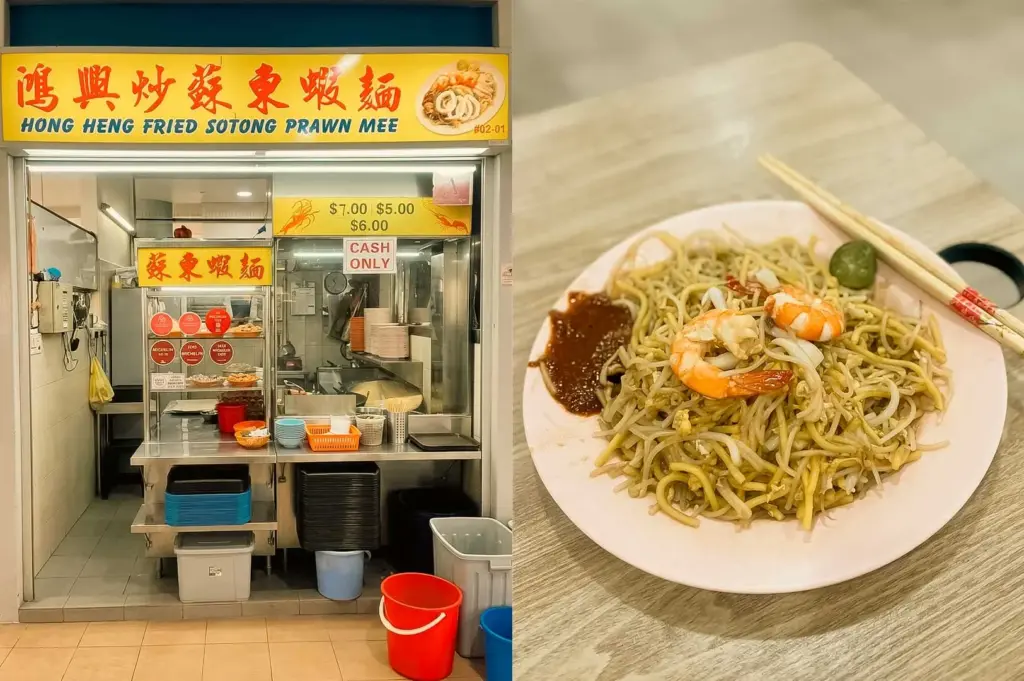
Tucked away on the second floor of Tiong Bahru Market, Hong Heng Fried Sotong Prawn Mee keeps things traditional. Each plate is fried to order with squid and prawns, accompanied by homemade chilli. The stall has also earned a Michelin Bib Gourmand, though there’s more to appreciate here than the recognition.
What catches our interest is how everything comes together. The soft noodles soak up the savoury stock, while the prawns and squid bring their own sweetness without taking over the dish. A little homemade chilli on the side helps balance the richness, especially when mixed into the noodles.
We wouldn’t necessarily come here expecting the strongest wok hei. Hong Heng seems more about getting the balance right, which makes it a suitable stop when exploring Tiong Bahru’s food scene. For something with a smokier edge, the charcoal-fired stalls further down this list offer a different experience.
The City Scoop
The Standout Factor: A well-balanced plate of Hokkien mee with savoury seafood stock, tender noodles and homemade chilli.
Pin This Spot: 30 Seng Poh Road, #02-01, Tiong Bahru Market, Singapore 168898.
Your Way There: Take the MRT to Tiong Bahru Station, followed by approximately 10–15 minutes on foot.
3. Swee Guan Hokkien Mee (Geylang Lorong 29)
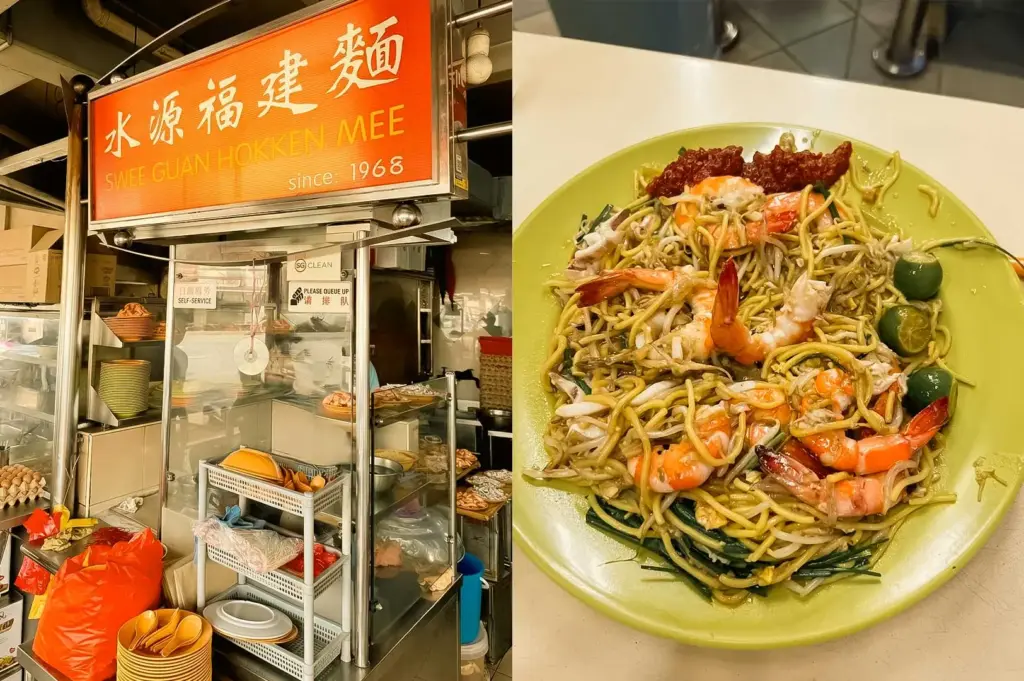
At Swee Guan Hokkien Mee, the charcoal fire is part of what makes the experience interesting. Around since 1968, this Geylang favourite has kept its traditional cooking method alive through the second generation of the family. Even the pork-bone stock plays a part in building the flavour before the noodles reach the wok.
The charcoal fire gives Swee Guan’s Hokkien mee a smoky character that sets it apart from the rest. There’s a noticeable depth to the wok hei, but it doesn’t take away from the rich seafood flavour. The silky noodles bring everything together, while the shelled prawns make the plate easier to enjoy without having to stop and peel between bites. It’s the kind of preparation that reminds us why traditional cooking methods still have their place in Singapore’s food scene.
The City Scoop
The Standout Factor: Traditional charcoal-fried Hokkien mee with pronounced wok hei, rich seafood flavour and a cooking method passed down through generations.
Pin This Spot: 5 Lorong 29 Geylang, Singapore 388060.
Your Way There: Take the MRT to Aljunied Station, followed by approximately 6–7 minutes on foot.
4. Geylang Lor Charcoal Fried Hokkien Mee (Siglap, East Coast Road)
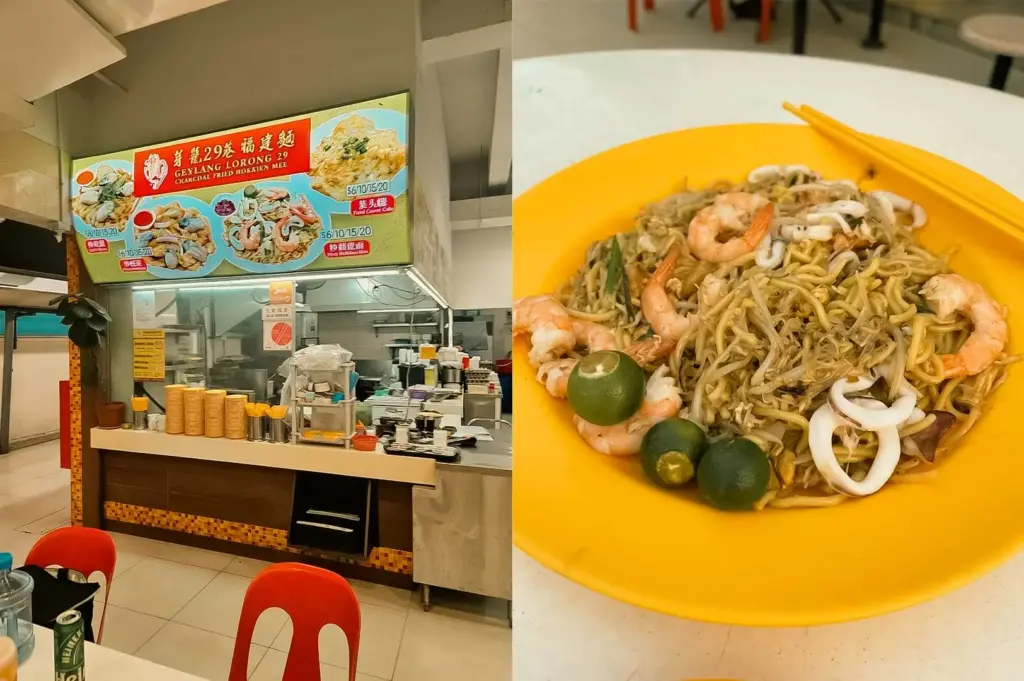
Don’t let the name confuse you. Geylang Lorong 29 Charcoal Fried Hokkien Mee is now along East Coast Road, and while it shares a family history with Swee Guan, the two are separate stalls. Founder Alex See previously cooked alongside his father at Geylang Lorong 29 before starting his own business. The stall eventually passed to his youngest daughter, Penny See, and her husband, who relocated it to 936 East Coast Road in 2023.
Thankfully, the charcoal cooking tradition has stayed. Here, the Hokkien mee leans towards the drier side, with a noticeable smokiness that doesn’t overpower the seafood flavour. Prawns, squid and crispy pork lard make up the familiar mixture, while the spicy sambal brings some heat to the plate. We particularly like the idea of how the different textures come together, although a little more chilli and consistently crispy lard would make the experience more satisfying.
The City Scoop
The Standout Factor: A relatively dry, charcoal-fried Hokkien mee with noticeable wok hei, seafood flavour and crispy pork lard.
Pin This Spot: 936 East Coast Road, 936 Food Village, Singapore 459129.
Your Way There: Siglap MRT is a nearby station. Check the walking route before heading down.
A Little Heads-Up: Closed on Mondays, with published portions ranging from S$6 to S$20, depending on size.
5. Ah Hock Fried Hokkien Noodles (Chomp Chomp Food Centre)
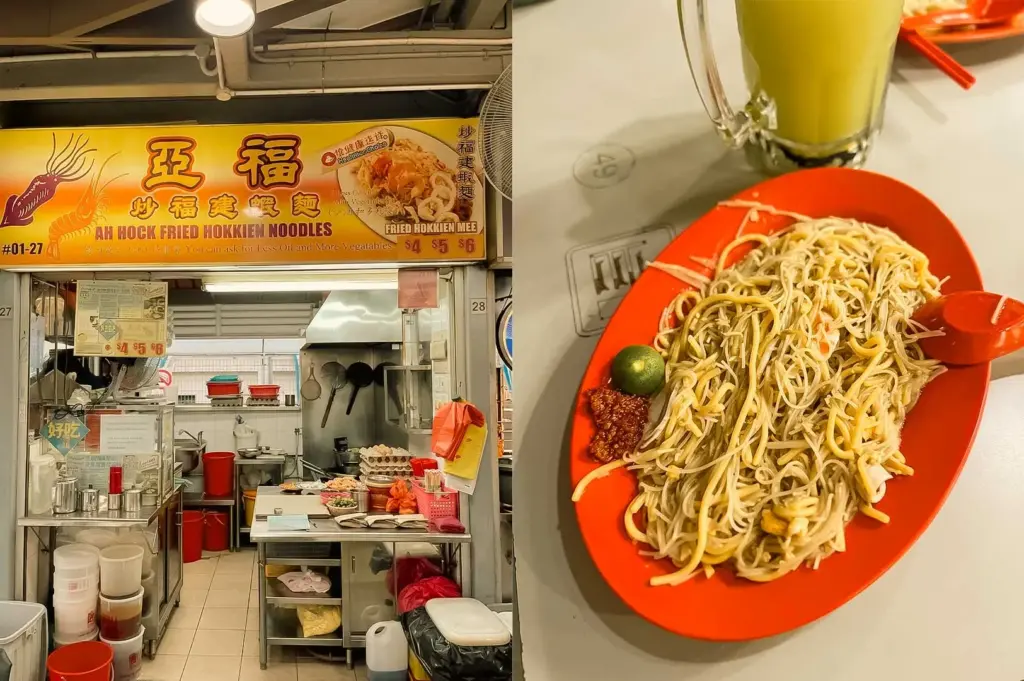
Good food has a way of keeping a place relevant, and Ah Hock Fried Hokkien Noodles has been part of Chomp Chomp’s food scene since the 1960s. The stall specialises in fried Hokkien mee, combining yellow noodles and thin bee hoon with prawns and squid. Its prawn and pork-bone broth is simmered for three hours, giving the noodles plenty of flavour to absorb.
Ah Hock’s version sits slightly towards the drier side, with the stock coating the noodles rather than pooling around them. The seafood adds some sweetness, while the chilli and calamansi help bring out the overall taste. It’s the sort of plate where we’d happily chomp through the noodles with the stock doing much of the work in carrying the flavour.
The City Scoop
The Standout Factor: A slightly drier plate of Hokkien mee with prawn and pork-bone stock and plenty of seafood flavour.
Pin This Spot: 20 Kensington Park Road, #01-27, Chomp Chomp Food Centre, Singapore 557269.
Your Way There: Serangoon MRT is a nearby rail connection, with an additional bus journey or a longer walk required to reach Chomp Chomp Food Centre.
6. Come Daily Fried Hokkien Prawn Mee (Toa Payoh)
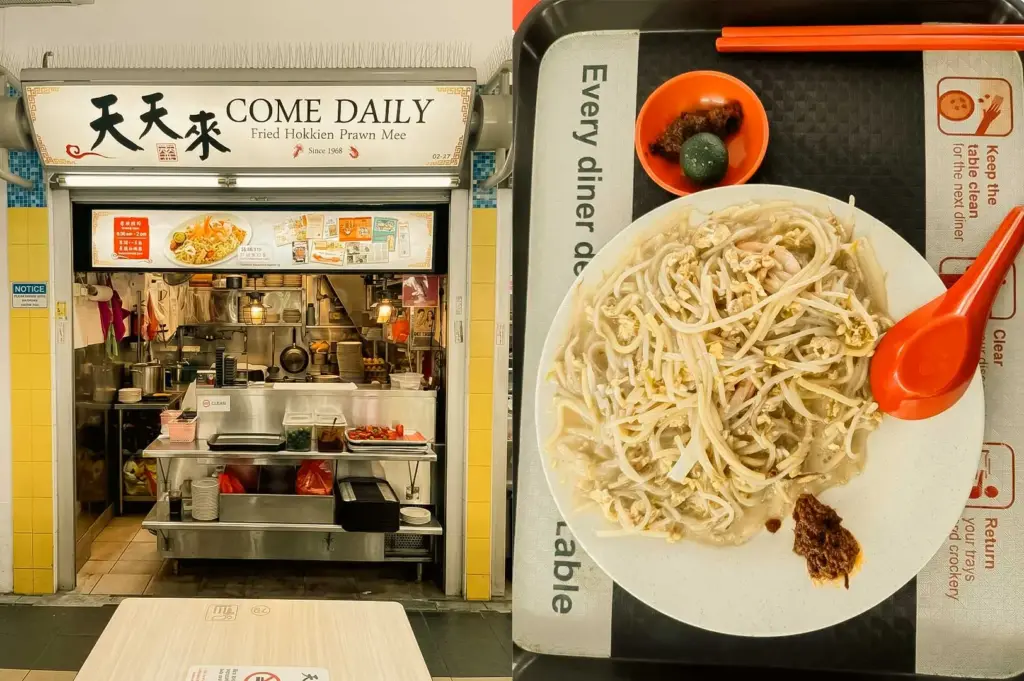
here’s something about a good, wetter plate of Hokkien mee that makes us appreciate how much work goes into the broth. At Come Daily Fried Hokkien Prawn Mee, also known as Tian Tian Lai, that tradition has been going strong since 1968. Tucked away on the second floor of Toa Payoh West Market & Food Centre, the family-run stall has built its reputation around rich prawn and pork stock.
Unlike the drier versions we’ve covered, Come Daily serves its yellow noodles and thick bee hoon coated in a glossy, savoury gravy. The prawns, squid and egg bring their own flavours, but it’s the crispy fried pork lard that makes this plate particularly interesting. We do find the contrast between the rich stock and crispy lard especially appealing, even if the wok hei isn’t quite as pronounced as the charcoal-fired options.
The City Scoop
The Standout Factor: Wetter Hokkien prawn mee with rich seafood stock, egg-coated noodles and crispy fried pork lard.
Pin This Spot: 127 Lorong 1 Toa Payoh, #02-27, Toa Payoh West Market & Food Centre, Singapore 310127.
Your Way There: Take the MRT to Braddell Station, followed by approximately 6 minutes on foot.
What Makes a Good Plate of Hokkien Mee
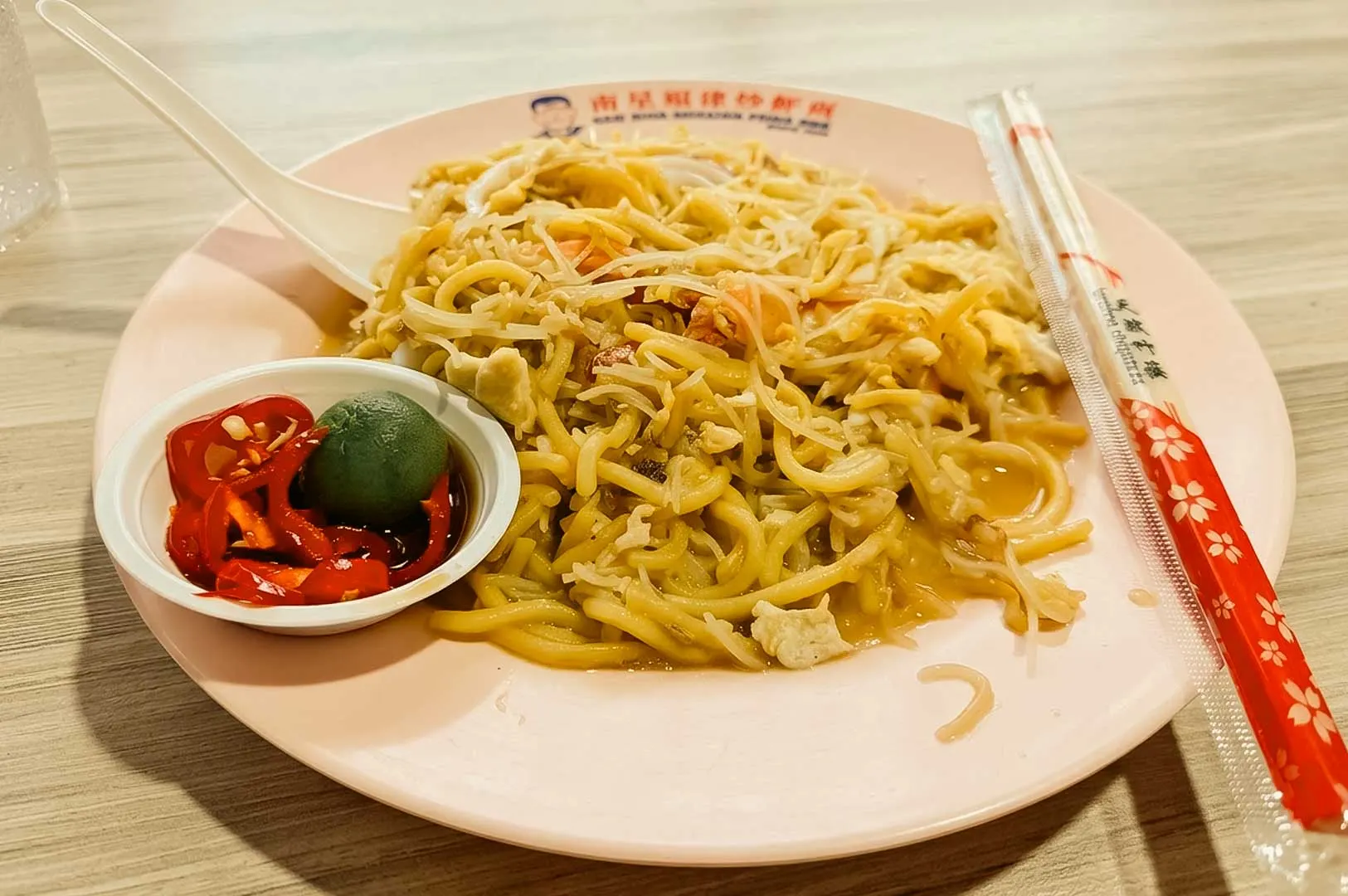
A good plate of Hokkien mee starts with yellow noodles, thick bee hoon or thinner rice vermicelli, fried with prawns, squid and egg before being cooked in seafood and pork stock. But it’s how the noodles absorb that stock that makes each plate different.
Whether the stock is completely absorbed or a little gravy remains when served, the fun is in finding what works for you. Sometimes, all it takes is a spoonful of sambal and a squeeze of calamansi to bring everything together.
For us, that’s part of what makes eating Hokkien mee in Singapore interesting. No two stalls approach it quite the same way.
There's Always Another Hokkien Mee Worth Trying
Singapore has no shortage of noodle favourites, from smoky char kway teow to comforting bowls of noodles and a good serving of fried rice. But Hokkien mee has its own charm. Whether it’s yellow noodles mixed with thin beehoon, softer white noodles or the occasional addition of pork belly strips, every stall seems to have a different way of bringing the flavours together.
Some prefer a sweeter broth, while others enjoy the smokiness of charcoal cooking. We’ve found that there’s no single gold standard worth chasing. Even something as simple as the noodle texture can change the experience, much like the difference between firm pasta and softer noodles.
And while these six stalls are a good starting point, there’s always more to explore, whether around Toa Payoh, the East Coast or further out in Tampines. Everyone has a voice in the Hokkien mee debate, and we’re quite happy to keep exploring before picking a favourite.